
This post may contain affiliate links. By clicking and making a purchase through the links, I earn a small commission at no extra cost to you. See my disclaimer for more information. This and display ads allow me to keep the site up to date and give back.
I’ve been working from the road for over 8 years, and Latin America is the region I keep coming back to. I’ve lived in Medellín and Buenos Aires, explored Peru with my pug Puglo, partied through Carnival in Rio, and these days I call Puerto Vallarta home.
What keeps pulling me back is the vibe, because I just feel at home in Latin America. The people are so friendly, the landscapes are insane, and every country feels so different from the next, but it’s still really easy to travel between them. It’s also one of the most dog-friendly regions I’ve traveled with Puglo.
For each place below, I’ve shared my own experience first (including the parts I didn’t love), followed by some practical tips, like which neighborhood to stay in, what rent costs, where to cowork and when to go.
Quick comparison
| City | Monthly rent (1-bedroom) | Best for |
|---|---|---|
| Puerto Vallarta, Mexico | $850 to $1,500 | Beach life, dog owners |
| Mexico City, Mexico | $800 to $1,200 | Food, culture, big nomad community |
| Oaxaca, Mexico | $600 to $1,250 | Food, arts, slower pace |
| Medellín, Colombia | $400 to $700+ | Spring weather, first-time nomads |
| Buenos Aires, Argentina | $600 to $1,000 | Big-city culture, nightlife |
| Lima, Peru | $600 to $800 | Food, ocean walks |
| Cusco, Peru | About $500 | Hiking, history |
| Rio de Janeiro, Brazil | $550 to $950 | Beaches, mountains, energy |
| Antigua, Guatemala | $600 to $1,200 | Learning Spanish, volcano hikes |
| Santa Teresa, Costa Rica | $800 to $2,000+ | Surfers |
| Cuenca, Ecuador | $350 to $750 | Low cost, calm, spring weather |
Staying connected in Latin America
For years I bought a local SIM card as soon as I landed. It was cheap, but the airport kiosks are always the most expensive place to buy one, and after a long flight I’d end up standing in line just to get Google Maps working. Hopping from one country to the next also meant a growing pile of little plastic SIM cards in my wallet, which drove me crazy.
These days an eSIM is the easiest way to get around all of that. You buy a data plan online before you leave, install it on your phone, and land with data ready for maps, Uber, WhatsApp, Google Translate and checking into your rental. If you’re spending most of your time in Mexico, an eSIM for Mexico covers you there.
While in super remote areas you may struggle, as with network connectivity anywhere, I consistently get good 5G and 4G LTE across Mexico, including places like Mexico City, Puerto Vallarta, and Oaxaca.
I keep my home SIM in my phone at the same time, so the eSIM handles my data and I can still get texts on my regular number, which is handy for bank verification codes. I also use my phone as a hotspot for my laptop when the café wifi drops in the middle of a call, which happens more often than I’d like during rainy season.
If you’re hopping between countries, JamboSIM’s Latin America eSIM covers most of the region on one plan, so you install it once and don’t have to buy a new eSIM at every border. It includes Mexico, Colombia, Argentina, Peru, Brazil, Chile, Ecuador, Costa Rica, Panama and Bolivia, along with a lot of the Caribbean.
You install it once and it keeps working as you cross borders, with the same QR code, the same data plan and the same price per gigabyte in every country. Your phone also connects to the strongest network in each country on its own, so you get 4G or 5G wherever it’s available without changing any settings.
Best places to be a digital nomad in Mexico
Puerto Vallarta

Puerto Vallarta is one of my homes, and I live in Versalles, which is the foodie neighborhood. It’s about a 15-minute walk to the beach, it’s super walkable, and there are so many cafés that I rarely work from home.
Life here with Puglo is really good. We go to the beach so he can run around, and it’s so dog friendly that you can bring a dog almost anywhere. I’m definitely more of a Pacific coast person, and I’d pick Puerto Vallarta over the Caribbean side any day.
Where to stay: Versalles is quieter and full of cafés and new apartment buildings. Zona Romántica is the lively, walkable area by the beach with the most nightlife, and 5 de Diciembre is a bit cheaper, with cobblestone streets and quick beach access.
Rent: A basic furnished place starts around 15,000 pesos ($850) a month, and a modern apartment with a pool or ocean view is closer to $1,400 to $2,000. Prices go up in high season, from November to April.
Internet: Most of the town has fiber, but outages can happen during summer storms, so ask your host for a speed test before you book.
Coworking: Angulo cowork is my go-to.
When to go: December to April is perfect, with sunny days and no humidity. June to October is very hot and humid with afternoon storms, and September and October are the toughest months.
Community: Search Facebook for “Digital Nomads in Puerto Vallarta” and “Young & Fun Expats of Puerto Vallarta”.
Mexico City

I never get tired of Mexico City, and I usually stay in Condesa. It’s full of beautiful parks for walking Puglo, and the whole city is really dog friendly.
It’s a huge city, so you do have to be a bit more careful with your belongings, and I’ve had friends get pickpocketed at events. The traffic can be overwhelming too, but once you find your people it’s one of the best places in the world to be a nomad. Get involved in the nomad community, because there’s so much going on there.
Where to stay: Condesa and Roma Norte are the main nomad neighborhoods, because they’re leafy, walkable and packed with cafés and coworking spaces.
Rent: Expect $800 to $1,200 a month for a furnished one-bedroom, and more for short stays of one to three months.
Internet: Home fiber is usually 80 to 200 Mbps, and coworking spaces often have backup connections.
When to go: The weather is mild all year, with chilly mornings. Rainy season runs from May to October, but it’s mostly afternoon showers. April to early June and September to November are the nicest months.
Good to know: There’s been tension in Roma and Condesa over rising rents and gentrification, including protests in 2025. Learning some Spanish, supporting local businesses and being a respectful neighbor goes a long way.
Community: The “Mexico City Digital Nomads” Facebook group has over 20,000 members, and there are language exchanges and meetups almost every night. I’ve shared more places to find your people in my guide to digital nomad communities.
Oaxaca

Oaxaca City is another favorite of mine, with incredible food, mezcal and a strong arts scene. I’ve covered it in more detail in my guide to the living as a digital nomad in Oaxaca.
Where to stay: Centro is the most walkable, Jalatlaco is artsy and close to everything, and Reforma is quieter for daily life.
Rent: About $600 to $1,250 a month, and less if you stay outside Centro.
When to go: March to May and September to November are the nicest months.
Good to know: Teacher protests sometimes block roads in Oaxaca (and even took over the airport in May 2026), and the city has had water shortages, so keep some flexibility in your plans.
The Yucatán side
Mérida and Playa del Carmen are both popular with nomads, but I haven’t spent much time on that side of Mexico.
Visas in Mexico
Canadians and Americans can get up to 180 days on arrival, but the immigration officer now decides how many days you get and some digital nomads have reported being given less. Always bring proof of where you’re staying, a return or onward ticket and proof of funds. You can’t extend it once you’re in Mexico.
If you want to stay longer, you can apply for temporary residency at a Mexican consulate before you arrive. The 2026 requirements at most consulates are around $4,600 a month in income or about $78,000 in savings, but each consulate sets its own numbers, so check yours.
Best places to be a digital nomad in South America
Colombia
Medellín

When I lived in Medellín, I stayed in El Poblado and I had the coolest 20th-floor apartment with the most amazing view, but I regretted it. Everyone I met was staying in Laureles, which felt so much more walkable and livable, so that’s where I’d stay next time. It’s also a very dog-friendly city, which amazing cafes and coffee.
The hiking around Medellín is really nice, but safety can be an issue, so go with other people rather than heading out alone.
Where to stay: Laureles is tree-lined, more local and cheaper, El Poblado is the most touristy and has the most nightlife, and Envigado is a quieter, less touristy option just south of the city.
Rent: About $400 to $700 a month in Laureles or Envigado, and $700 and up in El Poblado.
Coworking: WeWork has locations in the city, and Laureles has smaller spaces like Atomhouse and Casa Co.
When to go: It’s 18 to 28°C (64 to 82°F) all year, which is why it’s called the City of Eternal Spring. December to February and June to July are the driest months.
Safety: The main thing to know is that dating-app scams are a real problem in Medellín. In 2024 the U.S. Embassy warned about the deaths of several foreigners after dating-app meetups, and robberies involving drugged drinks (scopolamine) are common. Meet dates in busy public places and never leave your drink unattended. Phone theft is the most common everyday issue, so keep your phone out of sight on the street.
Community: There are tons of Facebook and WhatsApp groups, and Gringo Tuesdays is a long-running language exchange.
Visas in Colombia
Canadians and Americans get 90 days on arrival, which you can extend to 180 days per calendar year. Colombia’s digital nomad visa lasts up to two years, and you need to earn three times the Colombian minimum wage, which is about $1,380 a month in 2026.
Argentina
Buenos Aires
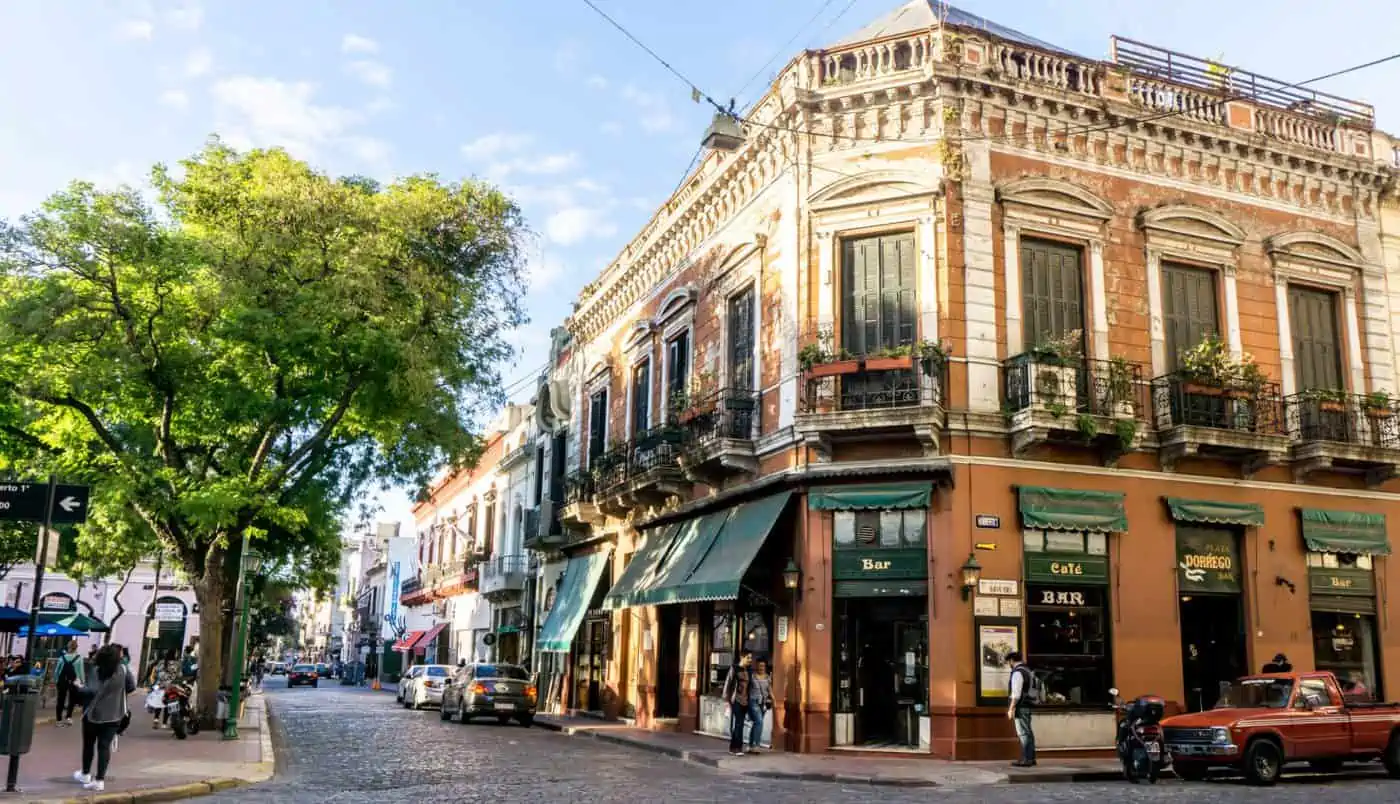
I spent a few weeks in Buenos Aires after Nomad Cruise Antarctica, and I didn’t love it as much as I expected to. Part of that was because I was sick for a lot of my stay, but the late-night culture was also a bit much for me, with dinner at 10 p.m. and clubs that stay open until morning. A lot of people love that about Buenos Aires, so it might be exactly your thing!
What I did love was all the parks, which were perfect for walking Puglo. Inflation was the annoying part, because I had to walk around with so much cash, and it’s gotten a lot more expensive recently.
Where to stay: Palermo is the go-to neighborhood for nomads, with specialty coffee, parks and coworking spaces everywhere. Recoleta is more elegant and quieter, and Villa Crespo and Chacarita are cheaper options next to Palermo.
Rent: Around $600 to $1,000 a month for a central one-bedroom in 2026.
Money: The good news is that it’s much easier now than when I was there. Foreign Visa and Mastercard cards now get close to the market rate, so you don’t need to carry nearly as much cash. Some people still bring clean U.S. $100 bills to exchange, and Western Union is another option.
Coworking: AreaTres, La Maquinita, Urban Station and WeWork all have locations.
When to go: September to November and March to May are the best months. Summer (December to February) is hot and humid.
Safety: Phone snatching is common, including by thieves on motorbikes, so don’t leave your phone on outdoor café tables or use it near the curb.
Community: Mundo Lingo language exchanges are a great way to meet people.
Visas in Argentina
Canadians and Americans get 90 days, which can be extended once for another 90. Argentina also has a 180-day digital nomad visa, which you can extend once, and you’ll need proof that you work remotely for clients outside Argentina.
Peru
Lima

Puglo and I spent a few weeks traveling around Peru recently, and we finished with a week in Lima, which turned out to be really nice. We stayed in Miraflores first, then in Barranco, which is the neighborhood that’s really popular with nomads. From both, we could walk down to the Malecón, the clifftop walk along the ocean, which is so pretty.
The food in Lima is incredible, the city was pretty dog friendly, and Peru as a whole is so rich in culture. I loved it. You can see our full route in my dog-friendly Peru itinerary.
Where to stay: Miraflores is right on the clifftops with the most coworking spaces, and Barranco is the creative, bohemian neighborhood with galleries and cafés.
Rent: Around $600 to $800 a month for a one-bedroom.
Coworking: Comunal, WORX in Miraflores, WeWork and Spaces.
When to go: December to April is the sunny season. From about June to October, the city is covered in a gray fog called garúa, which can get you down if you’re staying for months.
Cusco

We only stayed in Cusco for a few days on that trip, but it’s such a nice place if you want to do more hiking.
Where to stay: San Blas is the bohemian neighborhood with cafés and cobblestone streets (and a lot of stairs!), and San Pedro is more local and cheaper.
Rent: About $500 a month.
Internet: It works most of the time, but it’s slower than in Lima, so a coworking space is a good backup.
When to go: The dry season, May to September, has the best hiking weather, but it’s also the busiest and most expensive. October to April is the rainy season.
Good to know: Cusco is at about 3,400 meters (11,150 feet), so give yourself a few easy days before you plan a big work week.
Visas in Peru
Canadians and Americans get up to 90 days per entry and a maximum of 183 days in any 12 months. Peru announced a digital nomad visa in 2023, but in 2026 there’s still no way to apply for it.
Brazil
Rio de Janeiro
I went to Rio for Carnival with a group of friends after Nomad Cruise, and it was so much fun! It’s not the week you’d get any work done, but I wish I could have stayed longer. I’ve always wanted to go back, because the mountain and jungle backdrop is such a vibe, and the Brazilian culture (including the kissing culture during Carnival!) is so fun.
Where to stay: Botafogo and Flamengo are where most nomads live, because they’re better value and on the metro. Copacabana and Ipanema are right on the beach but cost more.
Rent: Around $550 to $950 a month for a furnished one-bedroom.
Coworking: COMO Coworking in Botafogo and Spaces in Ipanema.
When to go: April to June and September to November. December to February is very hot, stormy and crowded, unless you’re going for Carnival!
Safety: Phone theft is the most common problem for visitors. Don’t take anything valuable to the beach, use Uber at night, and only visit Centro during the day.
Visas in Brazil
Canadians and Americans now need an e-visa for Brazil. It costs about $81 and usually takes a few days, and it allows stays of up to 90 days at a time (180 days in a year). Brazil’s digital nomad visa requires $1,500 a month in income or $18,000 in savings, and it’s valid for one year.
Bolivia

I’ve only traveled through Bolivia as a backpacker, and it’s an incredible country with the Salt Flats, La Paz and Lake Titicaca. It’s not set up for remote work the way Mexico or Colombia are, though, so I’d treat it as a trip rather than a base. If you do want to stay longer, La Paz has coworking spaces with decent internet, and Sucre is a calmer, cheaper option, but cash can be hard to get and both cities are at high altitude.
Ecuador
I’ve only been to Ecuador as a backpacker, in the Amazon and the Galápagos, but Cuenca is slowly becoming more popular with nomads. It’s a pretty colonial city with a mild climate and a lower cost of living, and Ecuador uses the U.S. dollar, which makes budgeting easy.
Where to stay: El Centro is the most popular, and Ordóñez Lasso is where a lot of North American retirees live.
Rent: About $350 to $600 a month for a furnished one-bedroom in El Centro.
Internet: Fiber is widely available, with 55 to 100+ Mbps.
Coworking: Impaqto and La Ofi.
When to go: It’s spring-like all year at 16 to 22°C (61 to 72°F), and June to September is the driest stretch.
Good to know: Cuenca is at about 2,500 meters (8,200 feet). It’s considered one of the safest cities in the region, and most of Ecuador’s recent violence has been in the coastal provinces.
Visas in Ecuador
Canadians and Americans get 90 days, which can be extended to 180. Ecuador’s digital nomad visa gives you two years and requires about $1,450 a month in income.
Best places to be a digital nomad in Central America
Guatemala
Antigua

I’ve been to Antigua twice, and I really want to go back and spend more time a digital nomad. I love walking along the colorful colonial streets, the volcano hikes are amazing, and Guatemalan people are so nice. It’s also a great place to learn Spanish, since there are so many language schools and they speak a bit slower than other parts of Latin America.
Where to stay: In or close to the walkable center, because cobblestones and narrow sidewalks make long walks tiring.
Rent: About $600 to $1,200 a month for a furnished one-bedroom.
Internet: Apartment wifi can be spotty, so a lot of nomads work from cafés or coworking spaces like Impact Hub Antigua.
Spanish school: Expect about $130 to $190 a week for 20 hours of one-on-one lessons, or around $205 to $295 if you add a homestay with meals.
When to go: It’s mild all year. December to March is the dry season, and June to October is the rainy season.
Lake Atitlán
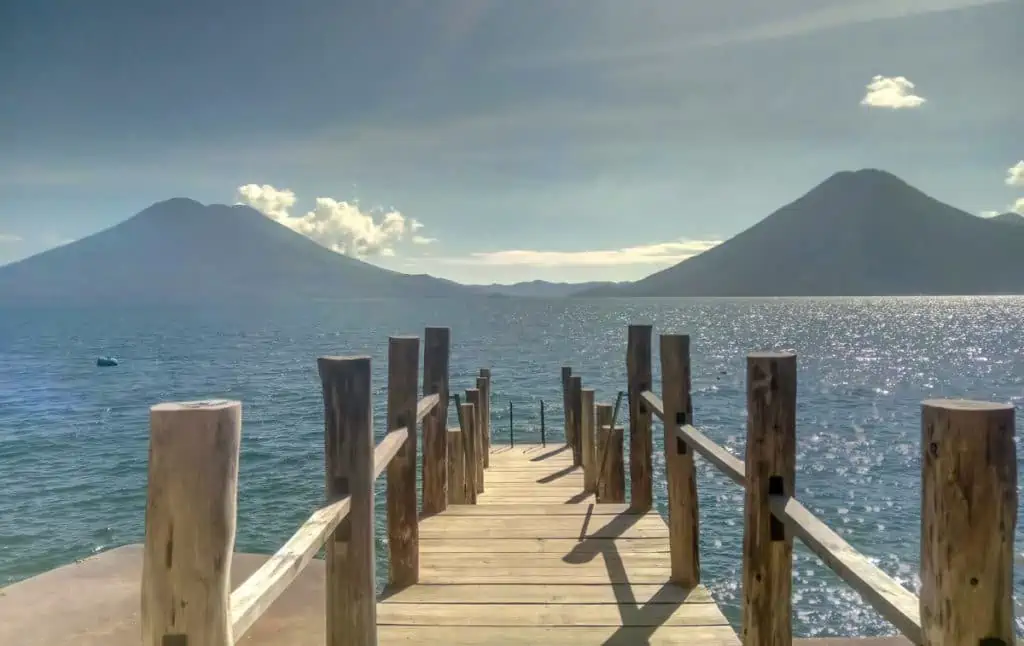
Lake Atitlán is becoming popular with nomads too. San Pedro has the most cafés and services, Panajachel has banks and shops, and San Marcos is the yoga and wellness village. The internet is slow (often 5 to 20 Mbps), and power cuts happen, so it’s better for a few weeks than a few months.
Visas in Guatemala
Guatemala is part of the CA-4 agreement, which gives you 90 days in total across Guatemala, Honduras, El Salvador and Nicaragua.
Costa Rica
Santa Teresa

I spent time in Santa Teresa and I didn’t love it. It’s become so expensive, and when I was there during the pandemic, it was almost impossible to find good housing. I also don’t surf, and if you’re going to live in a small surf town, you should probably want to surf! A lot of people love it there, but you’re not going to save money living there.
Where to stay: Along the main beach road between Playa Carmen, Santa Teresa and Playa Hermosa. Anything up the hills will need an ATV or car.
Rent: Roughly $800 to $1,500 a month for a basic place, and coliving spaces cost close to $2,000.
Internet: Fiber is available in parts of town, and some rentals now have Starlink. Power cuts are common in rainy season, so ask your host about backup.
When to go: December to April is dry season. May to November is the green season, with fewer crowds and lower prices.
Good to know: Most of the roads are dirt, which means a lot of dust in the dry season and mud in the rainy season.
Visas in Costa Rica
Canadians and Americans can usually stay up to 180 days, at the officer’s discretion. Costa Rica’s digital nomad visa requires $3,000 a month in income ($4,000 with family) and is valid for one year, with one renewal.
A few more places on my list
These are popular with nomads, but I haven’t spent time in them yet:
- Pipa, Brazil: a small beach town in the northeast with a few nomad coliving spaces, best from November to March
- Florianópolis, Brazil: an island city with beaches and a big tech scene
- Bogotá, Colombia: a big, cultural capital with lots of cafés
- Santiago, Chile: modern and well organized, with the Andes right there
- Montevideo, Uruguay: calm and easygoing, with a long waterfront walk
- Panama City and Boquete, Panama: Panama uses the U.S. dollar, and Boquete has cool mountain air
Being a digital nomad with a dog in Latin America
Puglo has been with me in Puerto Vallarta, Mexico City, Buenos Aires and all over Peru, and Latin America has been one of the easiest regions to travel with him. Puerto Vallarta and Mexico City are especially dog friendly, and Buenos Aires and Lima both have plenty of parks and coastal walks.
Final thoughts
Every country in Latin America has its own personality, so the best place for you really depends on what you want from your days, whether that’s big-city energy in Mexico City, beach walks in Puerto Vallarta or volcano hikes in Antigua. Wherever you end up, I hope you feel as at home here as I do. [
Visa rules and prices change often, so check official government websites before you travel. Information is current as of October 2026.
